A different way of seeing children, behaviour and development
In early years settings, practitioners spend a huge amount of time observing children; noticing what they do, how they play, and how they respond to the world around them. But knowing what to do with those observations isn’t always straightforward.
The Archetype Approach offers a way to make sense of it. Rather than treating behaviour as something to manage or correct, it invites practitioners to ask a different question: not “how do we respond to this behaviour?” but “what pattern might be expressing itself here?”
Built around 12 core archetypes – natural ways that children engage with the world, process experience, and relate to others – the approach helps staff recognise behaviour as meaningful rather than random. Each archetype can be expressed in a balanced state or an overwhelmed one, and what looks like “challenging behaviour” is often a sign a child is temporarily out of balance, not a problem to be fixed.
Children aren’t fixed within a single archetype. They may express several at once, and move between them as they grow.
Designed for educators working with early years children, and even children up to aged 7, the Archetype Approach works alongside the EYFS rather than replacing it. It’s a practical lens for practitioners, nursery staff, and SENDCOs, helping teams respond with intention, and turn everyday observations into meaningful next steps.
The Twelve Core Archetypes
Brings play, humour, and lightness. When balanced, they’re joyful and creative. When overwhelmed, they can disrupt or avoid taking things seriously.
Wants to create and make things real.When balanced, they’re practical and persistent; when overwhelmed, they can get stuck or fixated on outcomes.
Observes quietly before joining in. When balanced, they’re thoughtful and aware; when overwhelmed, they can withdraw or hesitate at the edges.
Learns through movement and physical exploration. When balanced, they’re active and engaged; when overwhelmed, they can become restless and impulsive.
Drawn to caring for and supporting others. When balanced, they’re kind and connected; when overwhelmed, they can over-give or seek constant approval.
Looks for order, structure, and control. When balanced, they’re organised and purposeful; when overwhelmed, they can become rigid, anxious, or controlling.
Brings intensity and big emotional expression.When balanced, they’re passionate and vibrant; when overwhelmed, they can become explosive or hard to contain.
Lives in ideas, stories, and inner worlds. When balanced, they’re creative and expressive; when overwhelmed, they can drift or become absorbed in their inner world.
Seeks connection and shared experience.When balanced, they’re loyal and warm; when overwhelmed, they can cling, people-please, or struggle being alone.
Processes the world through logic and patterns. When balanced, they’re curious and insightful; when overwhelmed, they can overthink or disconnect emotionally.
Challenges what doesn’t feel right. When balanced, they’re strong and honest; when overwhelmed, they can resist everything, even things that help them.
Driven to discover and try new things. When balanced, they’re curious and brave; when overwhelmed, they can become scattered or impulsively seek novelty.
Tapestry already supports settings using the Archetype Approach through everyday tools practitioners are familiar with:
Observations
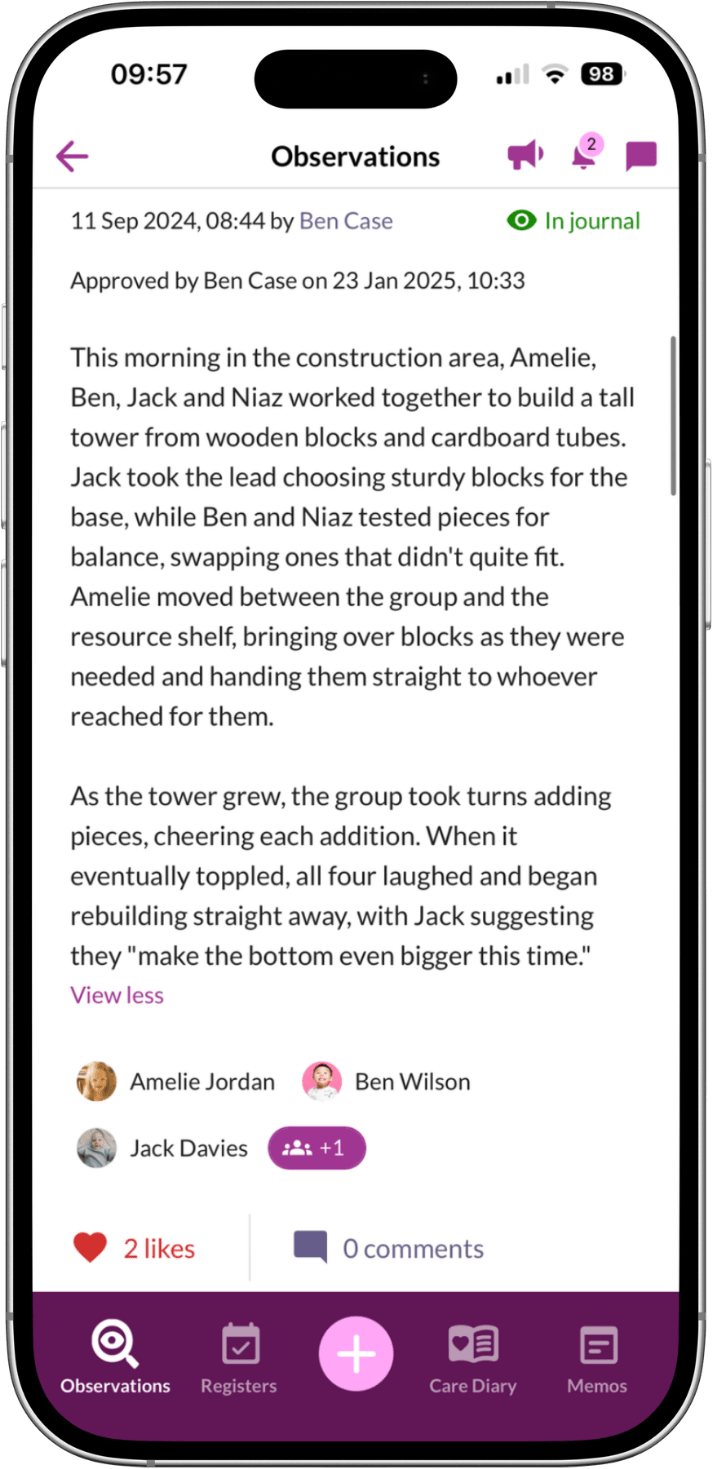
Capture what a child does, not just as a record, but as a way of noticing patterns over time.
Flags
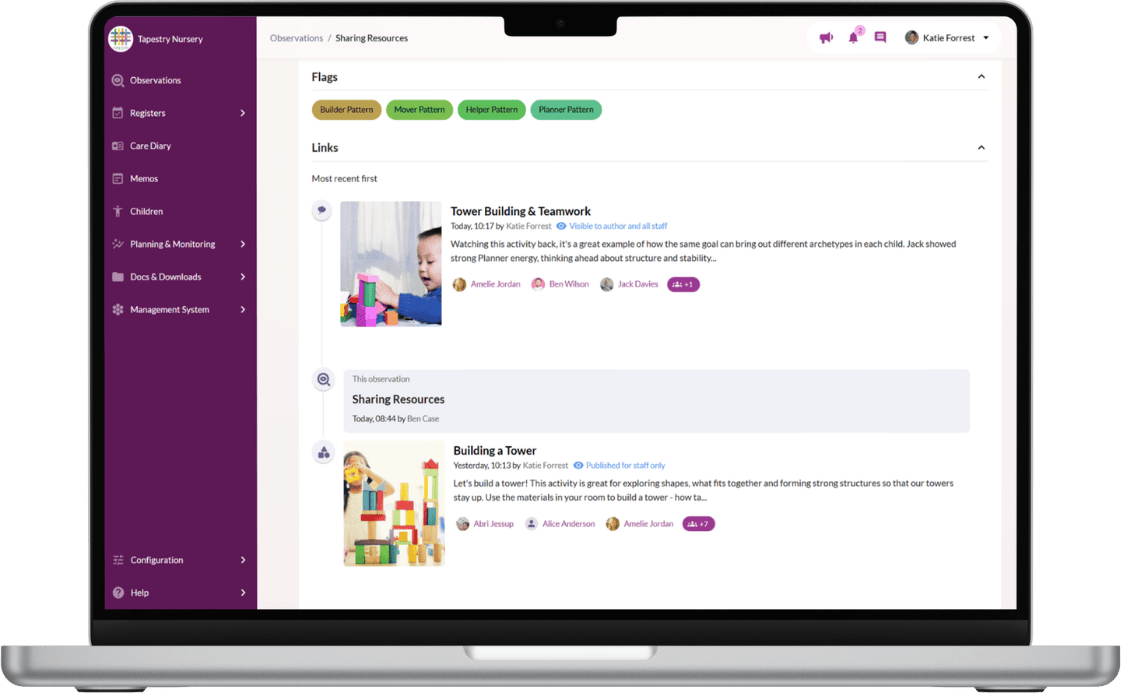
A custom flag set is already live in Tapestry, with one flag for each of the 12 archetypes. Staff can add these to observations to highlight emerging patterns as they happen. A dedicated framework to sit alongside these flags is currently in development.
Reflections
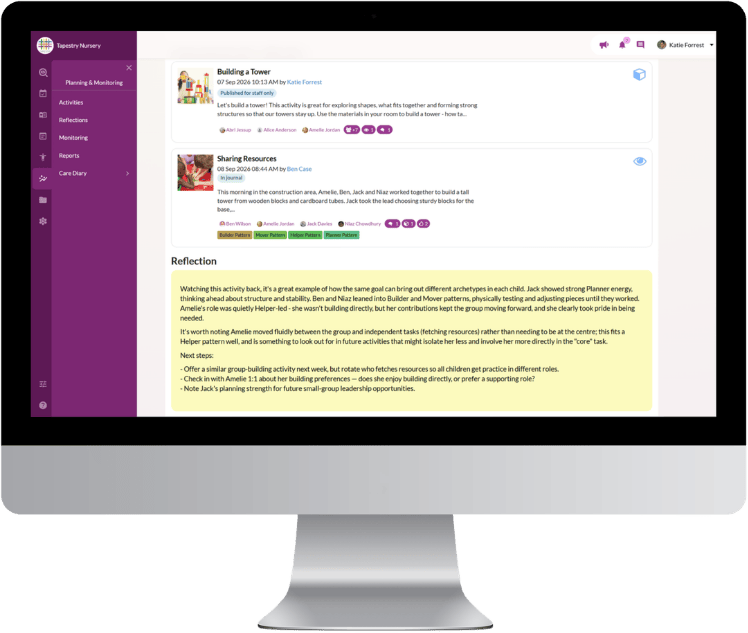
A staff-only space to consider what a child may need next, and track actions and impact over time. Use them to reflect on provision for an individual child, for groups of children or the setting as a whole.
Activities, Reports, Messaging & Memos
Parental communication is a huge part of the Archetype Approach, and Tapestry. Keep parents and staff in the loop, and support planning and monitoring with a variety of Tapestry tools.
And Tapestry is more than a learning journal; it also includes a Care Diary for daily care logs, accidents, incidents and medication, and a full Management System covering invoicing, booking, registers, and in-app payments.
The Archetype Approach and Tapestry
Tapestry and the Archetype Approach are currently developing a dedicated framework for settings to use directly within Tapestry, along with further resources, support materials and a Beginner’s Guide.
Give parents a clear picture of their child’s day, from feeding and napping to accidents, incidents and medication. Log everything in one place, let parents sign off forms digitally from their own device, and use dedicated reports to spot patterns and support safeguarding.
Tapestry CPD
Tapestry CPD offers high-quality, flexible professional development for your team. Created in-house in collaboration with sector experts, courses cover a variety of topics from child development, to getting the most from Tapestry.
Certificates are available on completion, and everything is included as part of a Tapestry subscription.
An example Reflection
The Early Years manager at Tapestry Primary School, Gabriel, has noticed issues with storing objects for loose parts play. He adds his thoughts to Tapestry as a reflection, and outlines what he hopes to achieve.
His co-manager, Jules, thinks it would be great to get the children’s families involved, and comments on the reflection to say she’ll speak to the Head about sending out a letter to parents.
Staff member Katie reports that after the letter is sent out, several parents have brought in some excellent repurposed items to use for Gabriel’s idea.
Tapestry Reflections are designed to be returned to as many times as needed – Gabriel, Katie and Jules can keep adding comments, and report on the impact once everything has come together!
Tapestry Reflections
The Reflections area of Tapestry is a structured, staff-only space for understanding the impact of your provision. You can add individual reflections to record thoughts about specific children, your practice, or even procedures within your setting. Capture notes individually or collaborate as a team to share insights, highlight strengths, and plan meaningful next steps for children and your school or setting.
Using Documents
Tapestry’s Documents feature gives you a secure, central space to store and share important files with families and staff. Whether it’s policies, forms, or helpful resources, everything is easy to organise and access when needed.
You can control who sees each document, with built-in virus scanning for added peace of mind.
Unlimited Media
Tapestry allows you to upload unlimited photos, videos, documents, and audio, making it easy to capture and share children’s learning in ways that feel natural and meaningful. Visual media helps bring observations to life, supporting understanding for all families, regardless of language or confidence with written communication.
With no limits, you can focus on what matters most – the moments themselves.
By encouraging FamilyObservations
Tapestry allows relatives to add their own observations from home, helping you build a fuller picture of each child’s development. These moments offer valuable insight into a child’s interests, experiences, and achievements beyond the setting.
By involving families, you can create a more connected and meaningful view of each child’s learning.
Using Reports
With Tapestry’s Reports feature, you can choose from a range of ready-made templates or design your own using a flexible editor. This makes it easy to create reports that reflect your approach and your school or setting’s needs.
Reports can be shared with families, helping you communicate each child’s progress, development, and next steps clearly.
Using Messaging
Tapestry’s Messaging feature makes it easy to communicate directly with relatives in a secure, familiar environment. Whether it’s a quick update before the day begins or a follow-up afterwards, conversations stay clear, private, and easy to manage.
Using Activities
With Tapestry’s Activities feature, staff can share ideas for learning at home, helping families stay connected to their child’s development. Activities can be simple, flexible, and easy to fit into everyday routines, making it easier for parents and carers to get involved.
Families can also respond with their own observations, supporting a more complete view of each child’s journey.
Using Memos
Tapestry’s Memos feature allows staff to send messages to groups of relatives, making it easy to share announcements, reminders, and important updates in one place. Staff can even use Memos to introduce themselves to families before a child’s first day, helping everyone feel familiar and prepared ahead of the transition. Everything stays within Tapestry, helping communication remain clear, consistent, and easy to access.
Using Messaging
Tapestry’s Messaging feature allows you to communicate directly with individual staff members or relatives, keeping conversations private, secure, and easy to follow. It’s ideal for sharing updates, asking questions, or having more personal conversations about a child’s day.
Using the Admin Toolkit
As part of Tapestry’s Admin Toolkit, you can transfer child profiles, together with their connected relatives, between Tapestry accounts. This ensures their learning journey continues smoothly, even as they move settings.
Alongside this, you can customise your account, schedule posts in advance, add unlimited staff and relatives, store unlimited data, and tailor notification settings to suit your team.
Bring it all together
Each part of Tapestry strengthens the next. Use Memos to share reminders or keep everyone aligned for the week ahead. Follow up with Direct Messaging when a parent needs reassurance, a quick clarification, or a more personal conversation. Set Activities to extend learning beyond the classroom – whether it’s practising spellings, noticing maths in the real world, or encouraging creative thinking at home.
Together, they keep communication clear, learning connected, and families involved in the everyday life of your classroom.
Bring it all together
Each feature on Tapestry supports the next. Observations capture the everyday moments of learning, with flags helping you highlight what matters as you go. If a child needs extra support, the Areas of Concern screen brings those flagged moments together so you can see everything in one place and from there, Reflections help you plan and record the actions you want to take.
Together, they help you celebrate the small moments, notice emerging needs, and plan thoughtful support for every child.
Using Bespoke Frameworks
Build your own curriculum using a CSV file, ready to import into Tapestry. You can create your own areas, aspects, statements and scales, organise them into a structure that suits your setting, and assess against them in observations.
Using Flags
Flags allow you to label an observation with specific points of reference, such as the EYFS areas, celebrations, or custom flags you have created. Once applied, these flags can be viewed and filtered for a specific child, or the whole setting, helping you quickly locate relevant observations.
Using the Areas of Concern Screen
The Areas of Concern screen gives you one place to note where a child may need more support across the EYFS areas. Any observations you’ve flagged in those areas appear here automatically, making it easy to look back at what you’ve seen and what it relates to. You can also start reflections from this screen, helping you keep track of the support you’re planning,
Using Reflections
Use structured staff-only reflections to understand the impact of your provision. Make notes for yourself, or work as a team to share insights, highlight strengths, and plan meaningful next steps for children, or for your setting as a whole.
Using Tapestry’s Monitoring tools
Whether you’re using EYFS flags, working with specific frameworks, or building your own curriculum, Tapestry keeps everything in one place. Our monitoring screens give you a clear, holistic picture so you can celebrate strengths and plan for what comes next.
Using Observations
Tapestry’s Observations feature allows you to capture photos, videos, notes, and audio in the moment. Add area flags and assessments, link other observations and activities, and build each child’s journal — then share updates with families with a single tap.